As companies grow, these everyday expenses spread across more employees, more teams, and more locations. What was once a simple cash arrangement starts to carry more weight. Tracking becomes harder. Accountability becomes unclear. Finance teams are left piecing together information after the spending has already happened. What began as a quick solution has now become a critical part of how businesses operate. Understanding and managing these everyday expenses has become just as important as managing large payments. And that is where the conversation around petty cash truly begins.
What Is Petty Cash?
Petty cash refers to the small, everyday business expenses that don’t fit neatly into traditional payment workflows. Office supplies, local travel, last-minute purchases, site-level expenses, or quick reimbursements, the kind of spending that happens fast and often.For most businesses, petty cash starts as a simple solution. A small amount of money is set aside so teams can move quickly without approvals or delays. Over time, however, this “small” system quietly grows into a blind spot.
Why Petty Cash Matters More
Individually, petty cash expenses look insignificant. Collectively, they tell an important story about how a business operates on the ground.As teams grow and operations expand across locations, petty cash becomes harder to track. Manual registers, spreadsheets, WhatsApp receipts, and end-of-month reconciliations begin to slow teams down. Finance has a hard time tracking those expenses data and employees spend time explaining expenses, if the list is very long.
What Are the Challenges with Manual Petty Cash Management?
Managing petty cash through physical cash or informal processes creates several challenges that demand a more structured approach.Lack of Attention
When cash is readily available, spending often happens without enough attention to detail. Receipts may be missing, records may be incomplete, and expenses may not always follow company policy. Over time, this lack of documentation increases the risk of errors, misuse, or even fraud.
To stay aligned with business objectives, expenses need to be recorded properly and reviewed against clear policies.
Reliance on Custodians
Many organizations assign a custodian to manage petty cash. While this adds a level of responsibility, it also introduces risk. The custodian must be trustworthy and consistent, and the system becomes dependent on one individual.
For proper control, expense records should be maintained by someone other than the person handling the cash. Without clear separation of duties, the chances of misappropriation increase.
Paper-Based Processes
Traditional petty cash systems rely heavily on paper logs and manual records. Unlike card or digital payments, petty cash does not automatically generate a transaction record.
Receipts and invoices can be misplaced, entries can be forgotten, and errors can go unnoticed until reconciliation. This makes audits time-consuming and reduces confidence in the accuracy of expense data.
Petty Cash Management with Bulkpe
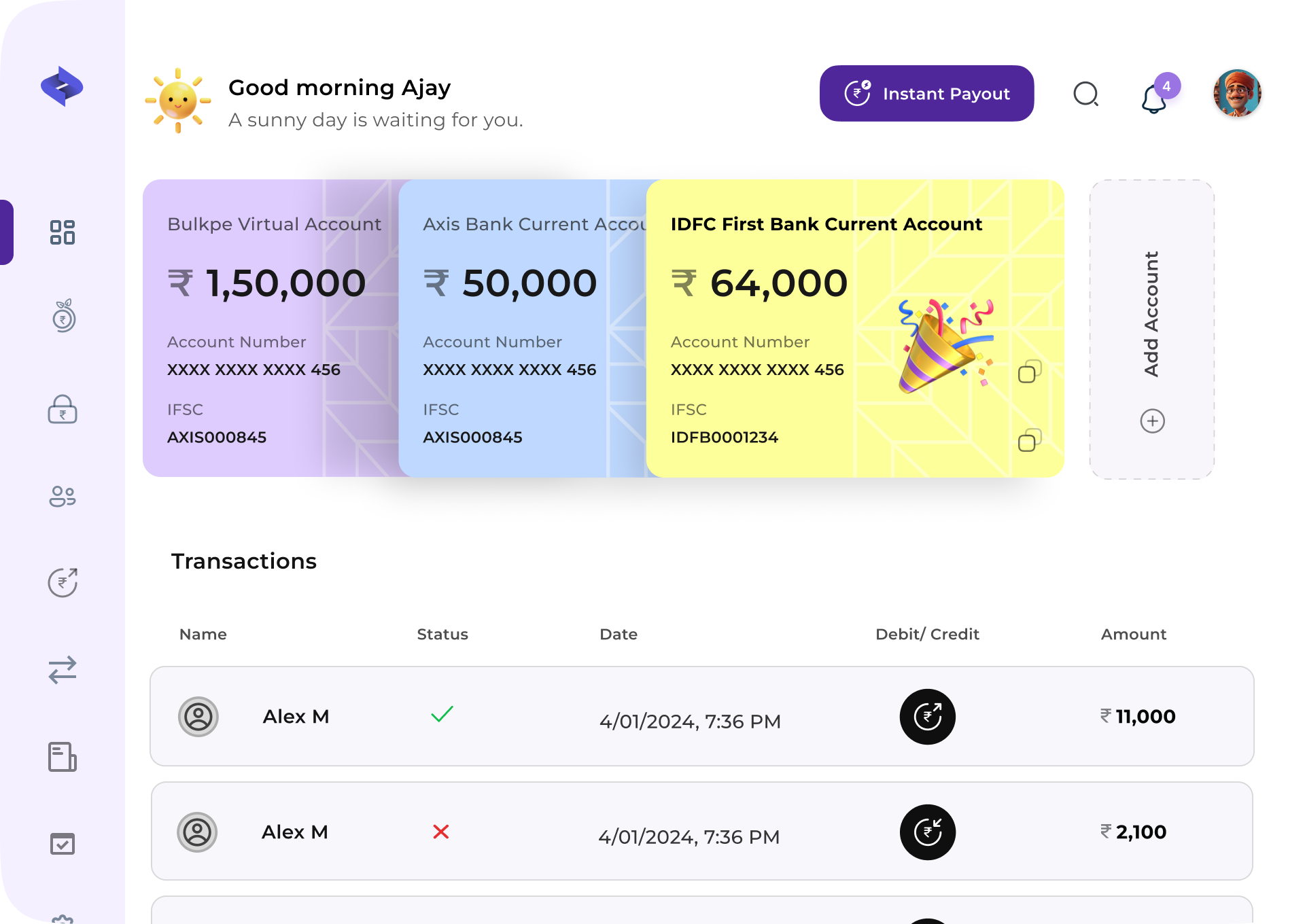
Petty cash is meant to keep teams moving, but when it’s managed through cash boxes, reimbursements, or spreadsheets, it often does the opposite. Information stays scattered, visibility comes late, and finance teams only understand spending after the fact. Managing petty cash through a single dashboard changes that. Expenses are captured as they happen, balances are always visible, and teams get clarity without extra steps. It brings ease of use for employees and real-time insight for finance, keeping everyday spending aligned with how modern teams actually work.Prepaid Expense Cards
Employees use prepaid FINO cards for petty expenses instead of cash or reimbursements. A single card swipe completes the expense, with no forms or follow-ups required.
Real-Time Visibility
Every transaction is captured instantly, giving finance teams live visibility across employees, teams, and locations.
Policy-Driven Limits
Spend limits are set upfront to align with company policies, keeping control consistent without slowing teams down.
Audit Trails
All expenses are logged automatically with clear records, making reconciliation and audits straightforward.
Invoice Upload
Employees can upload invoices at the time of spending or later, based on assigned permissions. This removes follow-ups and ensures every expense is backed by documentation.
Vendor Creation
Vendors can be added directly into the system when needed, without waiting on finance teams. This keeps day-to-day operations flexible while maintaining proper records.
Organisational Hierarchy
Large organisations can mirror their internal structure with multi-level hierarchies. Branches, teams, and approvers are mapped clearly, so expenses flow to the right people every time.
Petty cash management works best when it is simple, structured, and transparent. Paper logs, manual reconciliations, and reliance on individual custodians often slow teams down and make it harder to maintain clear visibility as businesses grow.
Bulkpe addresses this by moving petty cash into a single, digital workflow. Employee expenses are recorded in real time, documentation stays organised, and finance teams get clarity without adding extra steps, allowing petty cash to function smoothly in the background.
Sign up Now!
Thank you for choosing Bulkpe as your trusted payment partner. Your feedback, ideas, and questions help us grow, and we’re always here when you need us. Whether it’s support or just a quick chat, we’re only a click away.
Connect with Us