In today’s digital economy, recurring payments have become one of the most important mechanisms for businesses to sustain predictable revenue and for consumers to enjoy seamless service delivery. Simply put, recurring payments are automatic transactions that happen on a set schedule, without requiring manual approval every time.
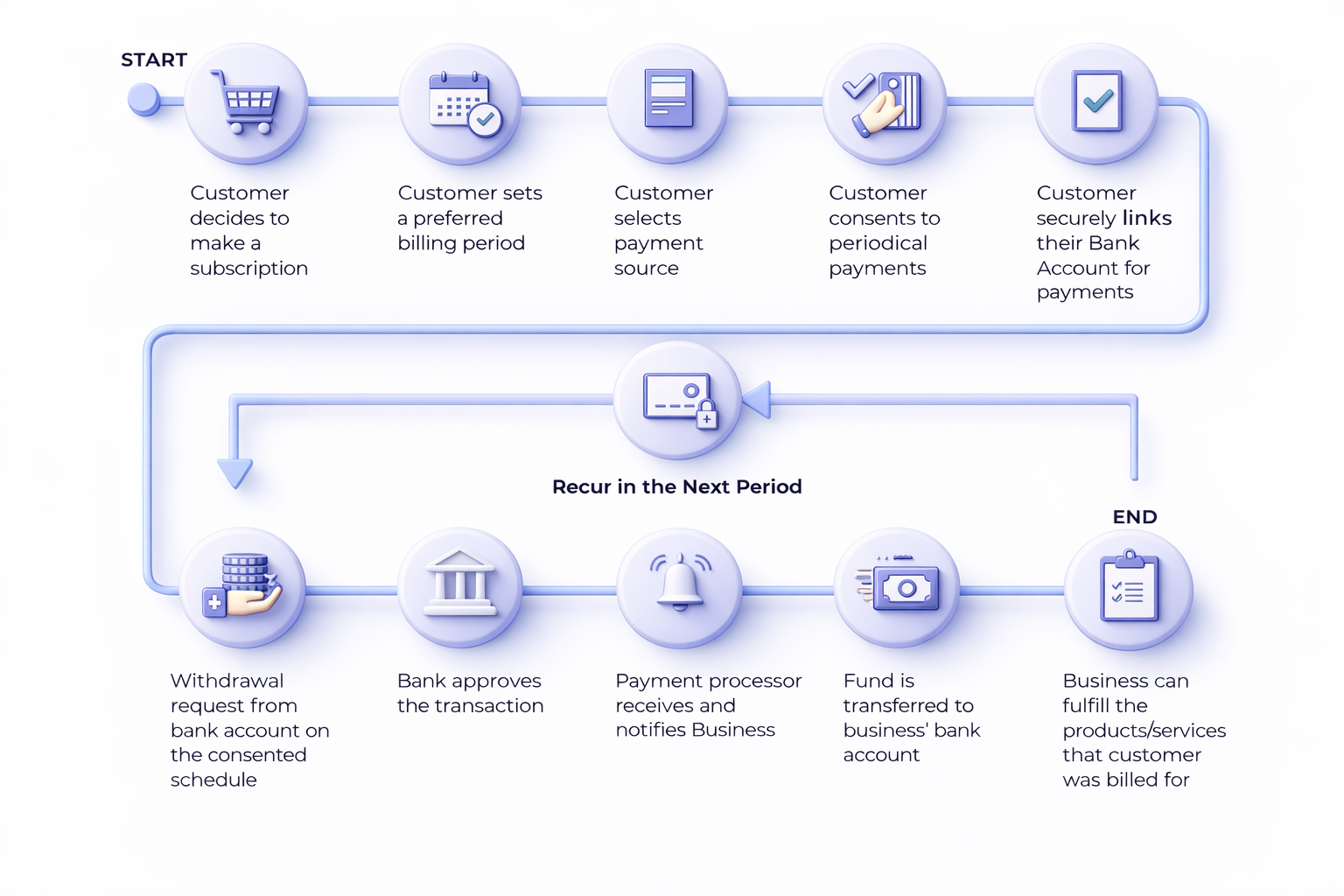
At its core, recurring payments eliminate the need for customers to remember due dates or make manual transfers each billing cycle. Once a customer gives one-time consent for automatic billing, future payments process based on a predefined schedule, whether weekly, monthly, quarterly, or annually, improving convenience and reducing friction for everyone involved.
This payment model has evolved from traditional subscriptions like magazine renewals to a vast array of modern use cases such as software services, loan EMIs, insurance premium collections, subscription boxes, utility bill payments, and more. In this blog, we explain recurring payments and walk through how Kumar adopted them with Bulkpe.
Meet Kumar, A Small Business Owner
Kumar runs an education services company in Chennai. His business charges students and parents monthly course fees. For years, fees were collected manually invoices sent via email, reminders via SMS or calls, and frequent follow-ups with parents who missed deadlines.
By the end of each month, Kumar and his team spent days reconciling payments, chasing dues, and handling disputes. No matter how streamlined his services were, the payment experience felt clunky and stressful, for both the business and his customers.
One day, Kumar realized he needed a better approach. He wanted a system where payments were collected automatically, transparently, and reliably. That’s when he started exploring recurring payments.
What Are Recurring Payments?
At its simplest, a recurring payment is a transaction that happens on a predefined schedule without requiring the customer to make a manual payment each time. This could be monthly, quarterly, annually, or even based on usage.
Think of:
- Your favorite OTT subscription charging your card every month;
- Your gym membership debit coming out consistently;
- Your insurance premium automatically collected at renewal.
Recurring payments are foundational to businesses where regular revenue streams matter. Rather than relying on customers to remember due dates and pay manually, recurring payments automate the process once a customer has given consent.
How Recurring Payments Work
To understand recurring payments fully, it helps to look at the underlying mechanics and key components that make them possible.
Authorisation and Mandates
The most essential step in recurring payments is obtaining the customer’s authorization. This typically involves a mandate that legally allows a business or service provider to debit funds from the customer’s account at regular intervals.
Digital Mandates (eMandates):
Modern recurring payments systems use electronic mandates, where customers provide secure, one-time consent through technologies such as UPI AutoPay or eNACH (electronic National Automated Clearing House). Once set up, future debits happen automatically without additional intervention.Payment App Approvals:
For UPI AutoPay, the user authorizes the recurring payment directly inside a UPI app by entering a PIN and confirming details such as amount and frequency. This can be done instantly and with minimal effort.Scheduling and Execution
Modern recurring payments solutions provide visibility and control to both merchants and customers:
- Customers can see upcoming debits, manage, pause or cancel mandates.
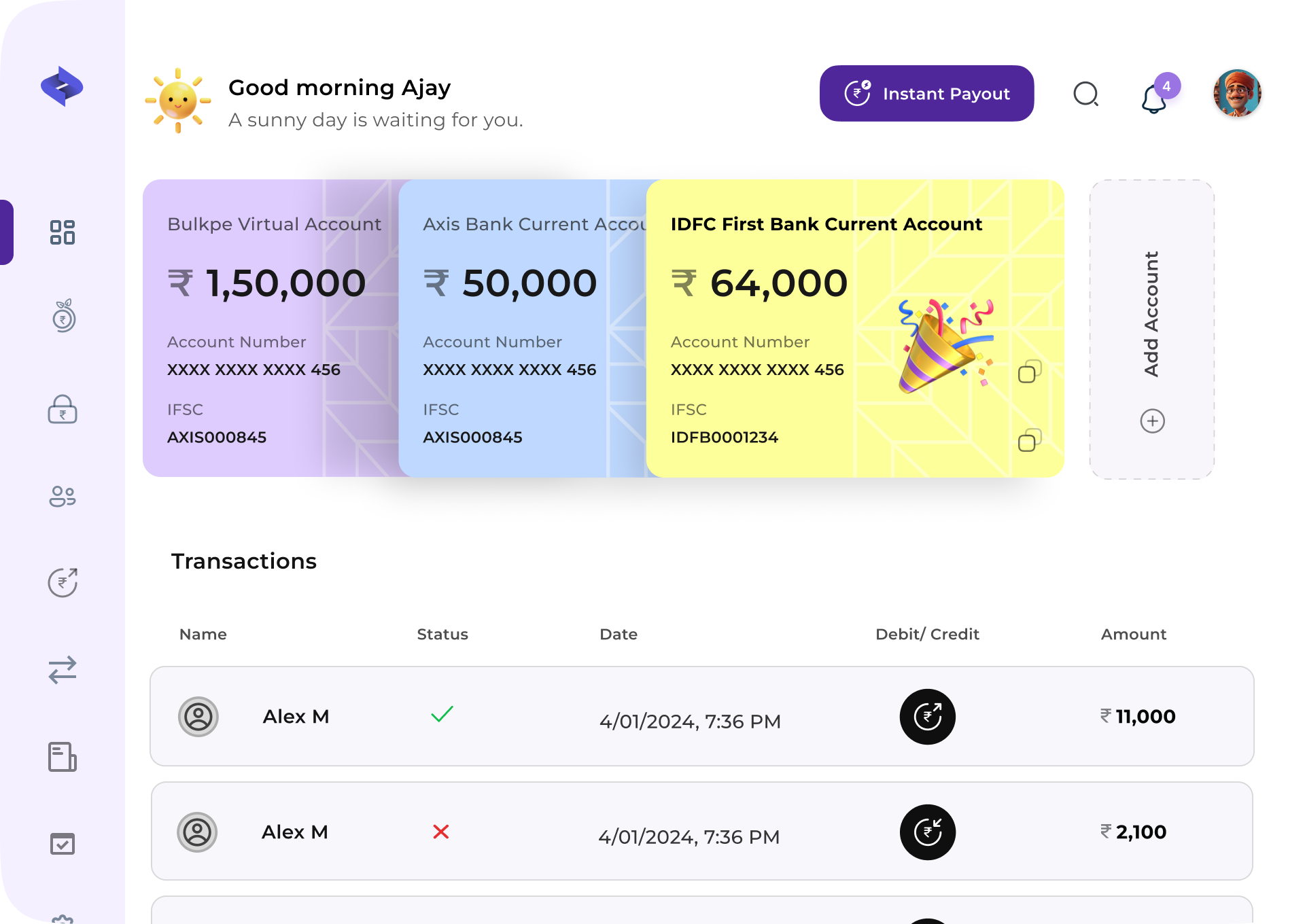
- Businesses can track scheduled collections, success and failure rates, and settle revenues accurately.
 This level of transparency is critical in boosting confidence and reducing disputes, especially in markets where users still prefer familiarity with manual payment methods.
Why Recurring Payments Matter to Businesses
Recurring payments aren’t about convenience. They’re about keeping operations steady and predictable.
1. Revenue Predictability
Scheduled collections bring consistency to incoming cash. Teams can plan budgets and operations without waiting to see who pays and when.
2. Operational Efficiency
Manual follow-ups, tracking sheets, and reminders disappear when payments run automatically, reducing avoidable workload for finance and ops teams.
3. Payment Reliability
Automatic payments lower the risk of missed or delayed transactions, creating a smoother experience for customers and fewer exceptions to manage internally.
Features in Recurring payments
India’s recurring payments landscape has evolved rapidly thanks to strong digital infrastructure, widespread UPI adoption, and regulatory support that enhances convenience and security.
UPI AutoPay
UPI AutoPay is an extension of India’s Unified Payments Interface (UPI) specifically designed for recurring payments. After the user selects a service, defines the frequency, and confirms with a UPI PIN, subsequent payments occur automatically under the mandate.
eNACH and NACH
The National Automated Clearing House (NACH) and its digitised counterpart eNACH are long-standing auto debit systems designed for large-scale and institutional recurring transactions. They support high-value debits such as EMIs, insurance premiums, and investment contributions, often handling volumes that batch-based systems can accommodate more reliably.
Why Both Systems Coexist
While UPI AutoPay emphasises speed, convenience, and user control, NACH offers stability and scale for higher-value institutional collections. Both systems address different use cases but together form a comprehensive recurring payments ecosystem in India.
g= Payments in Everyday Use Cases
Kumar’s case is just one example. Recurring payments power many real-world business scenarios:
Subscription Services
Whether it’s software tools, content services, or fitness platforms, businesses can set up monthly or annual billing that charges customers automatically.
EMI and Loan Repayments
Lenders and NBFCs use recurring debits to collect EMIs without borrowers needing to revisit payment portals each month.
Rent and Bills
Recurring payments make utilities, rent, school fees, and service retainers easier to manage for businesses and customers alike.
Memberships and Clubs
Gyms, associations, and loyalty programs benefit from reliable membership fee collection without manual actions.
Recurring payments impact nearly every industry not because they are fashionable, but because they solve predictability, cash-flow, and customer convenience challenges.
The Challenges Behind Recurring Payments
Recurring payment systems are simple from the user’s perspective, but complex behind the scenes. For businesses, there are several challenges:
1. Authentication and Compliance
In India, banks and regulators require proper authorization and notifications before debits occur. Mandate creation often involves additional factor authentication to protect users.
2. Failure and Retry Logic
If a customer’s account does not have enough funds, or if a mandate fails, recurring systems must have retry mechanisms to maximize successful collections without manual involvement.
3. Integration Complexity
Not all payment providers make recurring billing easy to implement. Some lack robust APIs, detailed status reporting, or reliable webhook notifications, making reconciliation and tracking harder for finance teams.
These challenges are precisely why businesses often hesitate before adopting recurring collections, even when they know the benefits.
How Bulkpe Transformed Recurring Payments for Kumar
When Kumar decided to move to a recurring billing model, he evaluated a few options. Most solutions addressed only parts of the workflow, collections, tracking, or reconciliation. What stood out with Bulkpe was that it covered everything in one place. A single setup to run recurring payments, track mandates and debits, and handle reconciliation without switching systems. That’s when Bulkpe became the clear choice.
Single Mandate Authorization
Bulkpe enabled customers to approve a mandate once and move on. From that point, collections ran on a fixed schedule without repeated approvals or reminders. For Kumar’s team, this meant fewer follow-ups and far less dependency on memory or manual tracking.
Multi- Channel Collections
Bulkpe supported recurring collections across UPI AutoPay, eNACH, and account debits. This gave Kumar’s customers flexibility in how they paid.
Mandate & Debit Visibility
Every mandate and debit was visible in real time. Kumar’s finance team could see what ran successfully, what failed, and what needed attention — without waiting for reports or reconciling at the end of the month.
Automated Reconciliation
Incoming payments were automatically matched against expected debits. What earlier took hours of manual work now closed itself, keeping records clean and reducing delays in reporting.
Mandate & Debit Visibility
Every mandate and debit was visible in real time. Kumar’s finance team could see what ran successfully, what failed, and what needed attention — without waiting for reports or reconciling at the end of the month.
By moving recurring payments to Bulkpe, Kumar’s business eliminated manual follow-ups and exception handling. Billing cycles ran on schedule, collections followed predictable patterns, and reconciliation closed automatically. The system reduced operational dependencies and standardised payment processing across cycles.
Recurring payments represent a fundamental shift in how businesses collect money and manage financial operations. They reduce manual work, improve predictability, and enhance customer experience.
For business owners like Kumar, they turn what used to be a major operational headache into a smooth, automated process. And with platforms like Bulkpe, designed for scale, reliability, and compliance, recurring payments become not just technically feasible but strategically advantageous.
Thank you for trusting Bulkpe as your payment partner. Your feedback and ideas drive our growth, and we’re always just a click away, whether you need support, have a question, or just want to share a thought.
Contact us?